
Say “South Indian food” to someone who’s never really dug into it, and you’ll get the same reply almost every time: dosas and idlis. And look, they’re not wrong to jump there — those two have basically become ambassadors for an entire region’s cooking. But that’s a bit like judging all of Italian cuisine off a slice of pepperoni pizza. There’s so much more going on. Five states, wildly different landscapes, centuries of kitchen knowledge — and most of it never gets talked about outside the families who’ve been cooking it for generations.
The Actual Basics of South Indian Vegetarian Food
To truly grasp what makes a Southern kitchen tick, you have to look past the generic labels. The flavors here are bright, clean, and constructed with serious precision using basic, whole ingredients.
The Real Secret: Mustard Seeds and Curry Leaves
North Indian food leans on cumin, garam masala, that whole warm-spice thing. South India does something different.
It’s built around tadka — hot oil, mustard seeds popping like tiny firecrackers, urad dal, a few dried red chilies, and curry leaves tossed in right at the end so they crackle and release that smell. You know the one. Almost every dish down south starts this way, or ends this way, or both.
The Power of Fermentation
Rice and urad dal, soaked, ground into a batter, left out overnight to do its thing. Nobody’s rushing this step — it just sits there, quietly fermenting, and by morning you’ve got something alive, slightly tangy, full of good bacteria. That waiting is exactly why idlis puff up soft and dosas turn out crisp instead of dense and flat. Skip the fermentation, and honestly, you’ve lost the whole point.
How the Food Changes Across the Southern States
This is where people get it wrong most often — treating “South Indian food” like it’s one thing. It isn’t. Coastal Kerala eats nothing like the hill country of Karnataka, and Andhra’s chili-forward cooking barely resembles Tamil Nadu’s.
Tamil Nadu: Chettinad Spices and Comforting Staples
Intricate home-roasted spice blends and well-balanced daily meals define Tamil Nadu’s cuisine.
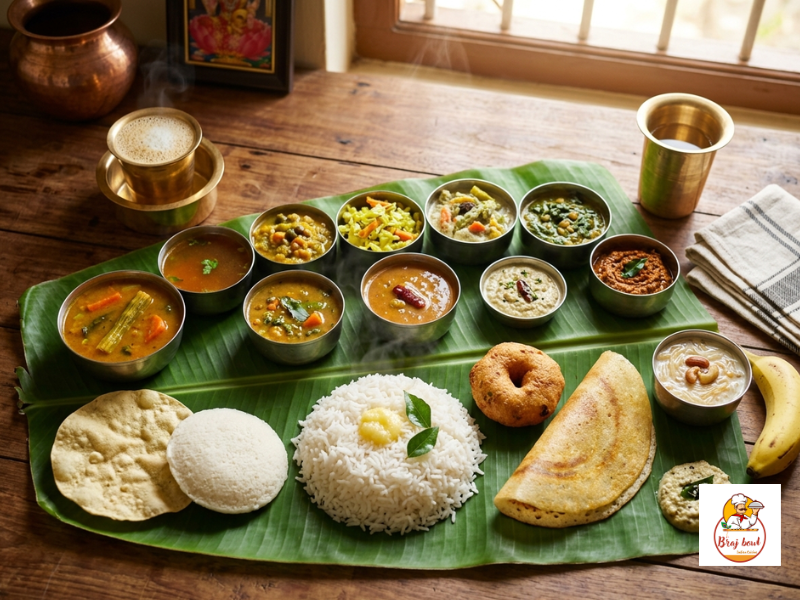
Tamil Nadu does spice blends the slow way — home-roasted, ground fresh, none of that pre-packaged shortcut stuff. Sambar’s the daily workhorse here: tangy, thick with lentils, drumsticks, pumpkin, little shallots, eaten with rice like it’s nothing special (even though it kind of is).
Karnataka: Udupi Heritage and Sweet-Savory Balances
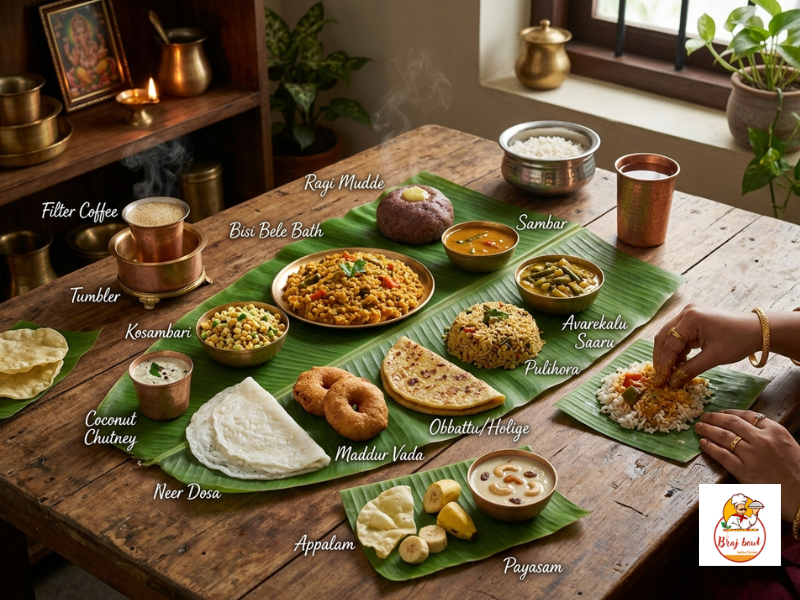
especially through its Udupi tradition, does this thing where fiery spice meets a little jaggery sweetness, and somehow it just works. Bisi Bele Bhath is the classic example — rice, lentils, vegetables, tamarind, a specific spice mix, all cooked together into one pot of something rich and slightly sour-sweet. Mysore Masala Dosa’s the showier dish: crisp dosa, a red chutney spread inside (no garlic, interestingly), stuffed with spiced potato.
Kerala: Coconuts, Bananas, and Feast Traditions
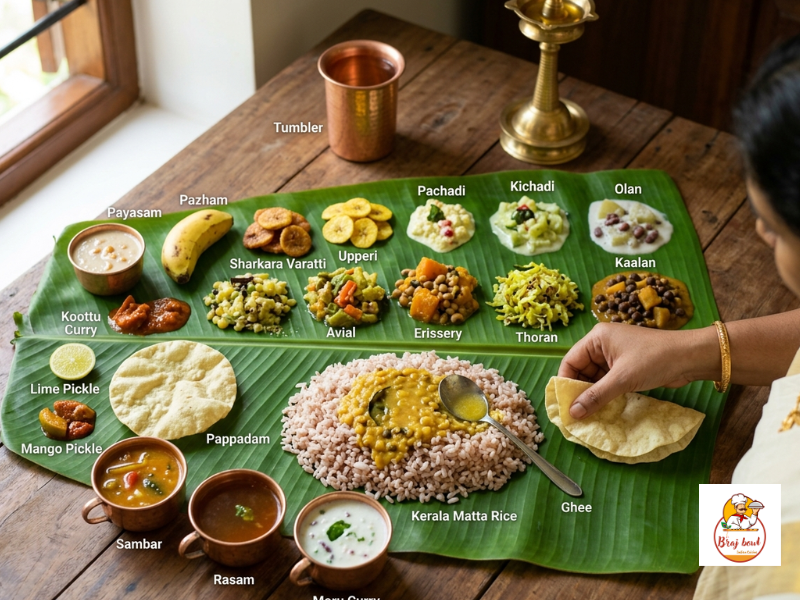
runs almost entirely on coconut. Grated, ground into paste, pressed for oil — doesn’t matter, it’s everywhere. Avial is the dish that shows this off best: raw banana, yam, whatever vegetables are around, all cooked in a rough coconut-chili paste with a bit of sour yogurt mixed in. Appam and stew is the other pairing people rave about — lacy rice pancakes with soft, almost spongy middles, next to a mild coconut-milk curry.
Andhra Pradesh & Telangana: Fiery Chilies and Tangy Pickles
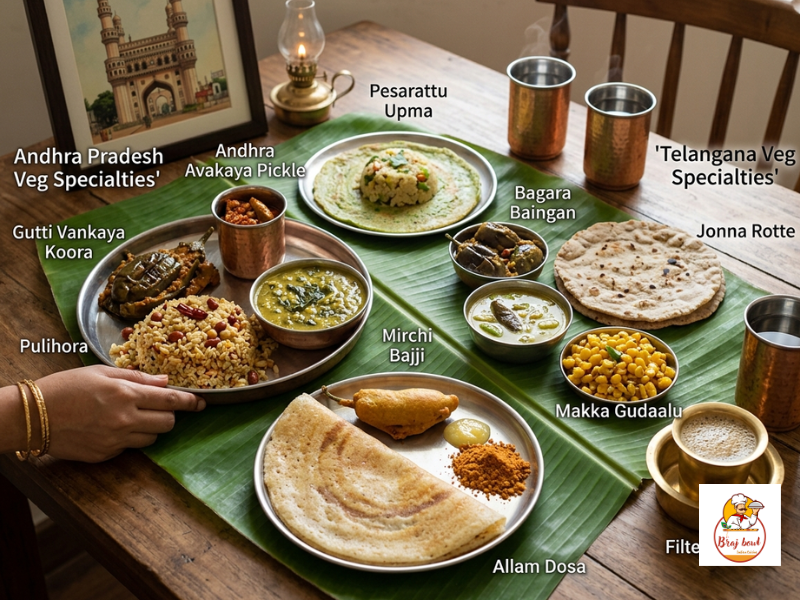
don’t hold back on heat, ever. Guntur chilies are the region’s calling card, and the food reflects it — sharp, tangy, unapologetically spicy. Pesarattu’s a good starting point if you want something milder: a crepe made from whole green mung beans, usually with ginger and green chili folded in. Gongura Pachadi is the opposite of mild — a tangy, spicy chutney made from sorrel leaves that can turn a boring bowl of rice into something you actually crave.
What on Earth is a South Indian Meals Platter?
Just like the northern thali, the traditional Southern “Meals” is an entire dining ritual, traditionally served on a fresh, vibrant green banana leaf.
It goes in order. Rice first, a spoon of ghee melting into it, maybe some dal or a vegetable kootu spooned on top. Then sambar gets poured over everything. Later in the meal, rasam shows up — thin, peppery, tamarind-heavy, meant to sort of reset your palate. And it ends with curd rice, cool and simple, alongside a lemon or mango pickle that cuts through all of it.
Common Questions About South Indian Food (F&Q)
1.Is South Indian food purely breakfast food?
No, not even close. Dosas and idlis get all the breakfast fame, sure, but lunch and dinner are where the real variety shows up — rice dishes, lentil stews, quick vegetable stir-fries (poriyals), the whole banana-leaf spread.
2.What is the difference between Sambar and Rasam?
Sambar’s thick, built on toor dal and tamarind, basically a stew. Rasam’s thin, almost like a spiced broth, leaning hard on tamarind, tomato, pepper, and cumin. Think stew versus soup.
3.Is South Indian food naturally gluten-free?
Mostly, yes — the rice-and-lentil batter behind dosas, idlis, appams has no wheat in it at all. Just watch out for hing in the tempering; some commercial brands cut it with wheat flour.
4.How healthy is a traditional South Indian diet?
Genuinely, yes. Fermented foods like idli are easy on digestion, and the spices — turmeric, pepper, mustard seed — carry real anti-inflammatory properties. Add in the lentils and you’ve got a pretty balanced way of eating.
5.What is Vada made of?
While it resembles a savory doughnut, the iconic Medu Vada actually relies on a thick paste of soaked black lentils (urad dal). Cooks whip the batter by hand to trap air, season it with black peppercorns, curry leaves, and ginger, and deep-fry it until it achieves a beautifully crunchy exterior and a soft, pillowy inside.
6.Is it easy to find vegan options in South Indian cuisine?
Very much so. Coconut oil’s the traditional fat here, not ghee or butter, so most dishes are vegan already. Just ask for no ghee drizzle on your dosa and you’re covered.
7.Why are curry leaves so vital to this food?
Curry leaves are not just a garnish; they are the flavor foundation of the South. When dropped into hot oil during tempering, they release a deep, nutty, citrus-like aroma that defines the backbone of almost every southern dish. They are also packed with antioxidants and highly praised in Ayurveda for aiding digestion.