The true heartbeat of this cuisine is completely vegetarian.We aren’t talking about boring salads, bland boiled veggies, or sad tofu substitutes either. Indian plant-based cooking has spent thousands of years perfecting the art of making vegetables, lentils, and grains taste incredibly rich and satisfying. It is a massive, chaotic, and beautiful mix of regional styles that changes entirely every few hundred miles.
The Actual Basics of Indian Vegetarian Food
To really get what is going on in an Indian kitchen, you have to throw out the idea of generic “curry powder.” No one in India actually uses that stuff. Instead, cooks build flavors from scratch using basic, whole ingredients.
The Real Secret: Tadka (Tempering)
You cannot understand Indian food without understanding tadka. It is not an ingredient; it’s a technique. You heat up some oil or ghee in a small pan, toss in whole spices like cumin seeds, black mustard seeds, or fresh ginger, and let them sizzle and pop. This hot, spiced oil gets poured directly over the cooked food right at the very end. It takes a simple bowl of boiled lentils and instantly turns it into something deeply aromatic.
Beans, Lentils, and Daily Grains
If you are eating vegetarian in India, dal (lentils) is life. Most families eat these slow-simmered lentils alongside basic whole-wheat flatbreads called rotis or a scoop of steaming hot Basmati rice. It is simple, cheap, and incredibly filling daily comfort food.
How the Food Changes From North to South
India is huge, and the climate dictates what ends up on the plate. Because of this, the food in the cold northern mountains has almost nothing in common with what people eat in the tropical south.
The North: Wheat, Paneer, and Rich Gravies
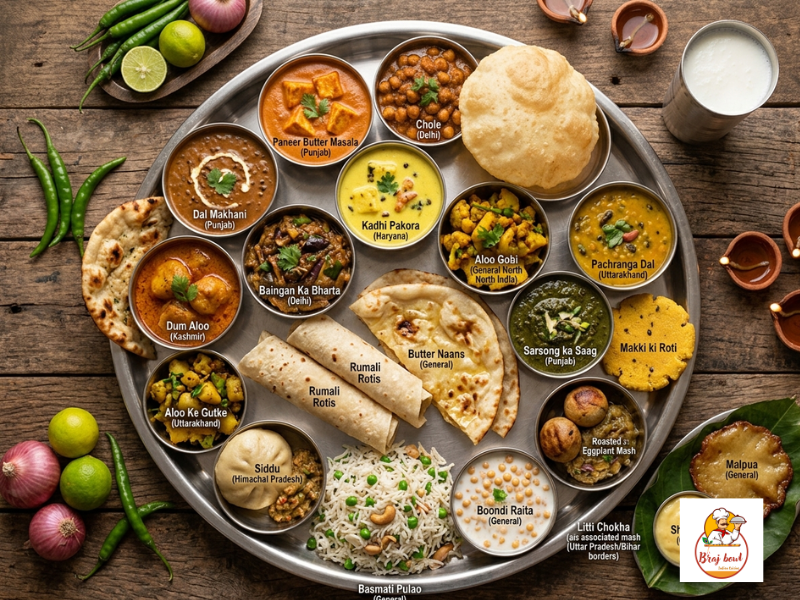
Because wheat grows easily in the north, people eat way more flatbreads than rice here. The weather gets cold, so the food is naturally richer, relying heavily on dairy, nuts, and slow-cooked sauces.
- Paneer Dishes: Fresh, non-melting cottage cheese cooked in velvety tomato and onion gravies.
- Chole Bhature: A spicy, dark chickpea curry paired with giant, puffy fried bread that deflates the second you poke it.
The South: Rice, Coconut, and Tangy Flavors
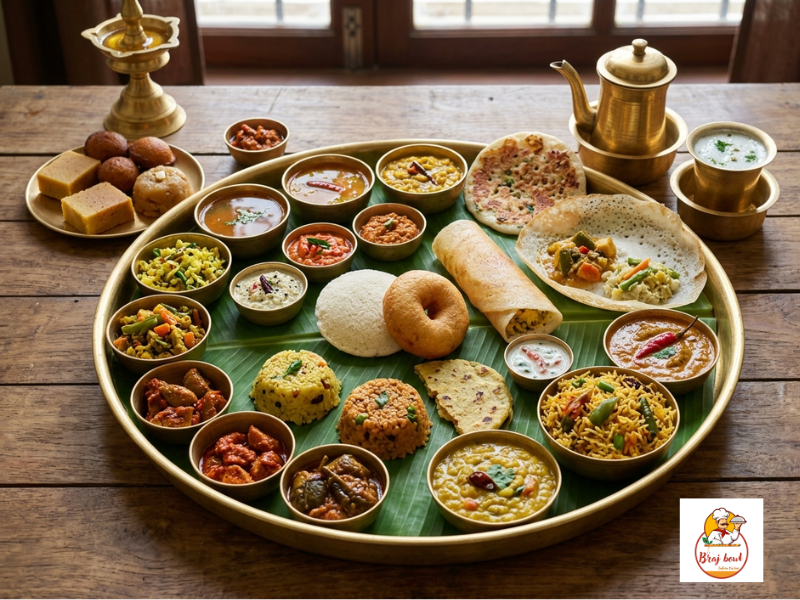
Down south, it is hot, tropical, and coastal. Naturally, coconut trees and rice paddies rule the local diet. The flavors here are much lighter, brighter, and often carry a sharp, tangy kick from tamarind.
- Masala Dosa: A massive, paper-thin, crispy crepe made from fermented rice and lentil batter, stuffed with a dry spiced potato mash.
- Sambar & Idli: Hot, sour lentil soup with vegetables (sambar) with steamed, fluffy rice cakes (idlis) for dipping .
Exploring Other Incredible Regional Styles
While the North-South division is the most famous, India’s western and eastern regions offer distinct flavor worlds that are just as legendary.
The West: Sweet-Savory Balances and Street Food
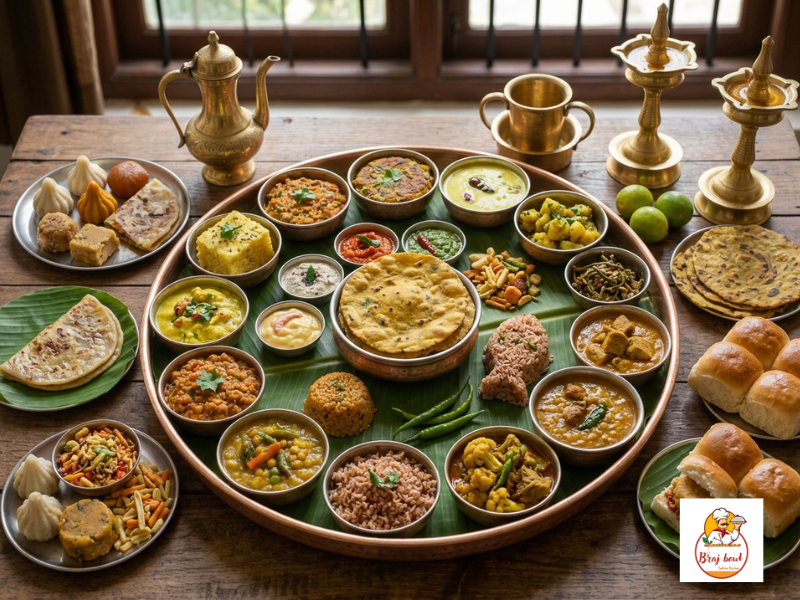
The western states, especially Gujarat and Rajasthan, are famous for being almost entirely vegetarian. Because parts of the region are quite dry, cooks became absolute geniuses at using chickpea flour (besan) and pairing sweet and savory flavors in the same bite.
- Pav Bhaji: A thick, spicy mash of mixed vegetables cooked on a giant flat griddle and served with soft bread rolls toasted in a mountain of butter.
- Dhokla: A soft, spongy cake made from fermented chickpea batter, tempered with mustard seeds and fresh green chilies.
The East: Mustard Oils and mild Spices
Eastern states like West Bengal and Odisha combine a fondness for rice with distinctive vegetarian delicacies. They cook with a heavy hand of raw mustard oil, which lends a pungent aroma to their dishes unlike other parts of India. They also like Panch Phoron, a special mixture of five spices, which includes fenugreek, nigella, cumin, black mustard and fennel seeds.
- Aloo Posto: A comforting, minimal dish of potatoes cooked in a rich, textured poppy seed paste.
- Bengali Luchi & Alur Dom: Puffy, pale white flour flatbreads served with a thick spiced potato curry.
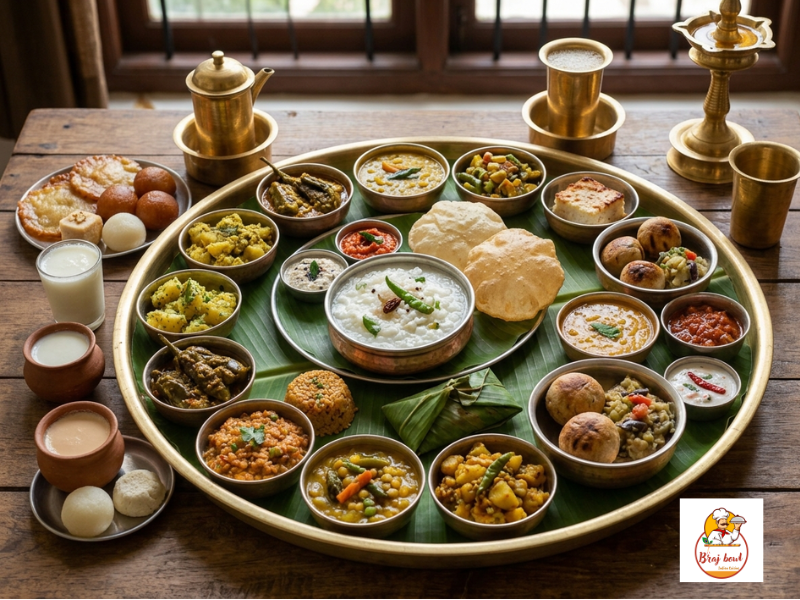
What on Earth is a Thali?
If you ever want to experience the full spectrum of Indian food in one sitting, you order a Thali. It is not a single dish—it is a giant round metal platter packed with a dozen tiny bowls called katoris.
The design of a thali actually goes back to ancient wellness ideas. The goal is to balance six different tastes on your tongue at the same time: sweet, sour, salty, bitter, spicy, and astringent. When you eat a thali, you get a little bit of everything: a dry vegetable stir-fry, a rich gravy, a bowl of dal, cooling yogurt, fresh flatbreads, crunchy papadums, sharp pickles, and a small sweet. It is easily the ultimate way to feast.
Frequently Asked Questions on Indian Food (F&Q)
1. Is all Indian food burning hot and spicy?
Not at all. People often confuse “spicy” with “chili hot.” Indian food uses a ton of spices—like coriander, cardamom, cumin, and cinnamon—but these are used to build deep flavors and aromas, not just to burn your tongue. You can easily find incredibly mild, sweet, and comforting dishes.
2. Naan vs Roti- what is the difference?
It’s all in the flour and the way you cook it. Roti is a simple everyday flat bread made with whole wheat flour and cooked on a flat iron pan on the stove.Made from white flour, often with yeast or yogurt to make it rise, and baked in a searing hot clay tandoor oven, naan is considerably thicker and fluffier.
3. What Is Made Of Paneer?
Paneer is a fresh, unsalted cheese made from milk that is boiled and curdled with lemon juice or vinegar.Once the curds separate, they are pressed into a solid block. It is 100% vegetarian, doesn’t melt when cooked, and acts like a sponge for whatever delicious gravy you cook it in.
4. Is Indian food easy for vegans?
Yes, it is probably the easiest cuisine in the world for vegans. Most South Indian dishes are naturally vegan. The main things you need to watch out for are ghee (clarified butter) and cream. If you ask the kitchen to skip the ghee and use oil instead, a massive chunk of the menu instantly becomes vegan-friendly.
5. Why are so many people in India vegetarian?
Vegetarianism in India is thousands of years old. It is deeply tied to spiritual traditions like Hinduism, Buddhism, and Jainism. These cultures place a huge emphasis on Ahimsa, which is the practice of non-violence toward all living creatures.
6. What is “Tadka” in recipe?
Think of Tadka as a flavor bomb. It is a quick cooking step where you fry whole spices in hot oil or ghee for a few seconds to release their natural oils, then pour that sizzling mixture right over a finished dish. It completely changes the depth of the flavor.
7. What do Indian families actually eat at home every day?
They don’t eat heavy restaurant curries. A typical home-cooked dinner is very light and simple. It usually consists of a warm Roti, a bowl of comforting yellow Dal, and a dry Sabzi (which is just a quick stir-fry of whatever vegetables are in season, like okra, cauliflower, or potatoes).