
Ask anyone who grew up around Indian cooking what the real secret is, and they won’t say a recipe. They’ll point to the spice box. The Masala Dabba — that round steel tin every Indian kitchen seems to own — holds the actual backbone of the cuisine. Not just salt and chili either. Once you open one up properly, you’re looking at seeds, bark, dried roots, pods, resins… a whole pantry inside a pantry.
New to this? Or maybe you’ve cooked Indian food for years and still can’t quite explain why a dish tastes “right.” Either way, these twenty spices are where that answer lives.
The Everyday Basics
Walk into most Indian kitchens and you’ll find the same handful of spices doing most of the heavy lifting, day in, day out.
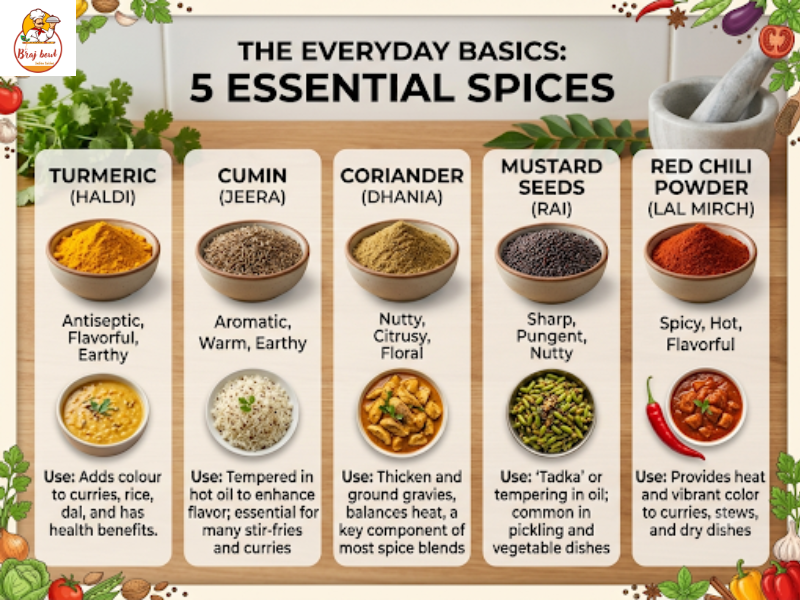
1. Turmeric (Haldi):
Probably the one spice nobody skips. It’s what makes curry that golden-yellow color, though the flavor matters just as much — warm, earthy, with a slight bitter edge that mellows out once it hits hot oil or a simmering broth.
2. Cumin (Jeera):
Toss these seeds into oil and you’ll hear them before you smell them — that sizzle means the meal’s actually started. Nutty, warm, a little smoky. Ground cumin works differently, sinking into sauces rather than announcing itself.
3. Coriander (Dhania):
People are always surprised this comes from the same plant as cilantro. Tastes nothing alike. Ground coriander is mild and sweet with a citrus edge, and it does double duty — thickens gravies a bit and softens whatever sharper spice is sitting next to it.
4. Mustard Seeds (Rai) :
Tiny, round, unassuming until they hit hot oil and start popping. That’s when the real flavor shows up — sharp, nutty, a bit aggressive in a good way. Big deal in South Indian tempering especially.
5. Red Chili Powder (Lal Mirch) :
Not one thing, really — ranges from Kashmiri chili, which is all color and barely any heat, to blends that’ll genuinely make you sweat. Kashmiri’s the one people reach for when they want that deep red gravy without setting anyone’s mouth on fire.
Whole Spices That Build Depth
These usually get fried whole or dry-roasted first, then ground down into blends — garam masala being the obvious one.
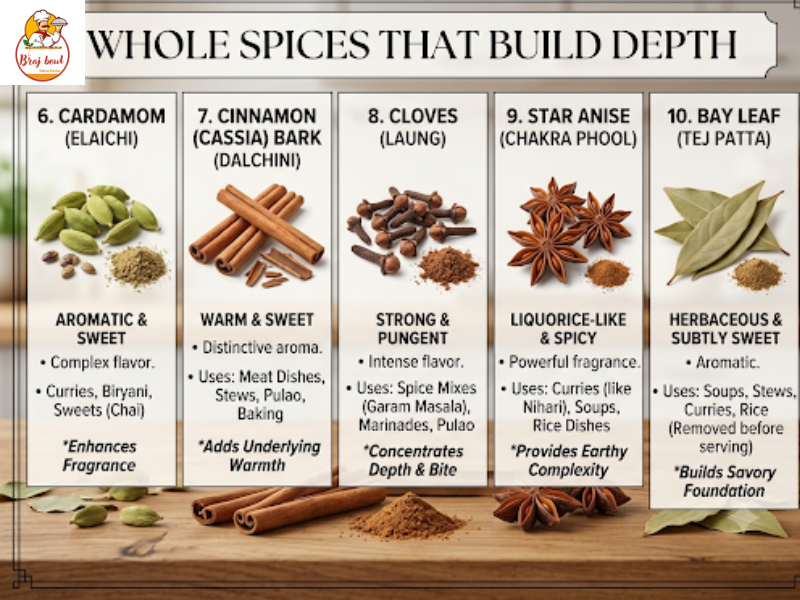
6. Cardamom (Elaichi) :
Green cardamom shows up everywhere — biryani, kheer, even chai. Sweet, floral, a little herbal. Black cardamom is nothing like it though — bigger pods, rougher texture, and a smoky quality that comes from how it’s dried over open fire, traditionally.
7. Cinnamon or Cassia Bark (Dalchini) :
Here’s a distinction most people miss: Indian cooking generally uses cassia, not the soft rolled Ceylon cinnamon sticks common elsewhere. Cassia’s stronger, sweeter, holds up better in a slow-cooked meat curry or a tomato-based gravy that’s simmering for an hour.
8. Cloves (Laung) :
Strong stuff. Sweet, intense, and honestly a little dangerous if you’re heavy-handed — two or three whole cloves is plenty for cutting through a rich meat dish or dense lentils.
9. Star Anise (Chakra Phool):
That eight-pointed star is unmistakable, and so is the faint licorice note it leaves behind. Mostly shows up in aromatic rice and slow-simmered curries — not an everyday spice, more of an occasion one.
10. Bay Leaf (Tej Patta) :
Don’t confuse this with the European bay leaf — it’s not even the same plant. Indian bay leaves come from cassia trees and smell closer to cinnamon and clove. Subtle, but you’d miss it if it weren’t there.
The Bold, Pungent Ones
Used sparingly, mostly because they’re strong enough that more isn’t better.
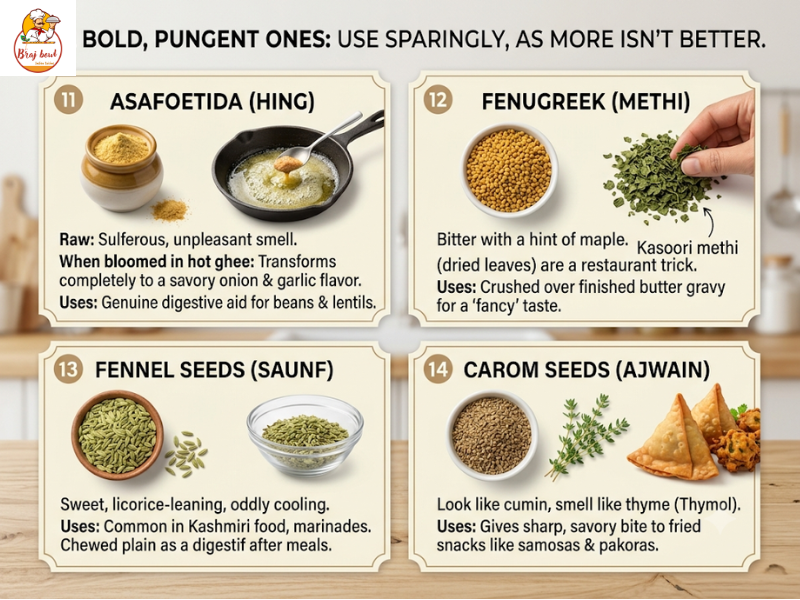
11. Asafoetida (Hing) :
Raw, this stuff smells rough — sulfurous, almost unpleasant. But bloom a pinch in hot ghee and something changes completely; it turns savory, almost like onion and garlic together. Also genuinely helps digestion with beans and lentils, which is half the reason it’s used at all.
12. Fenugreek (Methi) :
Small yellow-brown seeds, bitter with a strange hint of maple underneath — sounds odd, tastes right. Dried fenugreek leaves (kasoori methi) are the trick a lot of restaurants use — crushed over a finished butter gravy right before serving, and suddenly it tastes like it came from somewhere fancier.
13. Fennel Seeds (Saunf) :
Sweet, clearly licorice-leaning, and oddly cooling for something that tastes this strong. Common in Kashmiri food, in marinades, and chewed plain after a meal — you’ve probably seen a little bowl of these by the register at an Indian restaurant.
14. Carom Seeds (Ajwain) :
Look almost exactly like small cumin seeds, but smell them and you’ll get thyme instead — thymol does that. Fried snacks like samosas and pakoras lean on ajwain for that sharp, savory bite running underneath the crunch.
Finishing Touches and Tangy Notes
Not every spice needs a long cook time. Some are meant to go in last, right when the dish is nearly done.
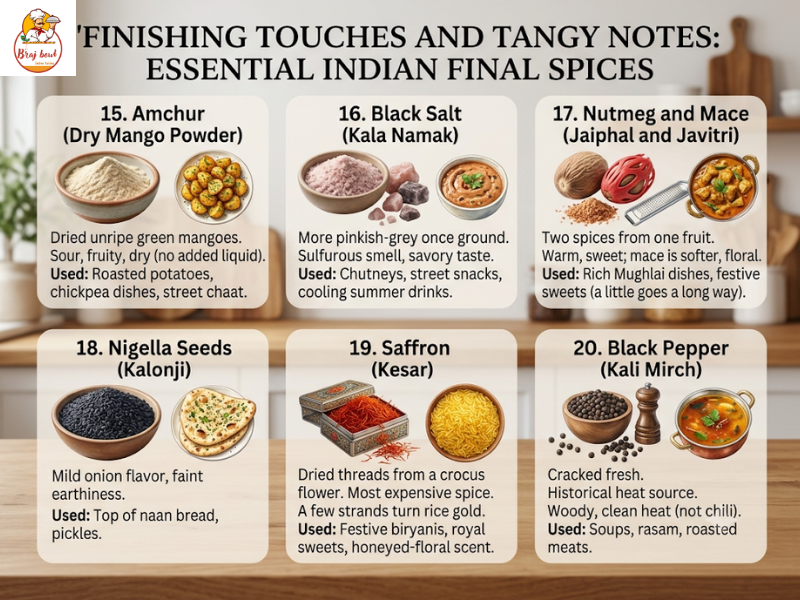
15. Amchur (Dry Mango Powder) :
Dried, unripe green mangoes ground into powder — sour, fruity, and dry (no added liquid, which matters). Shows up on roasted potatoes, chickpea dishes, and pretty much any chaat you’ll find on the street.
16. Black Salt (Kala Namak) :
Despite the name, it’s really more pinkish-grey once it’s ground. Smells sulfurous, tastes savory — that distinct tang in a lot of chutneys, street snacks, and cooling summer drinks comes straight from this.
17. Nutmeg and Mace (Jaiphal and Javitri):
Two spices from one fruit — nutmeg’s the seed, mace is the red lacy covering around it. Both warm and sweet, though mace comes across softer, more floral. Rich Mughlai dishes and festive sweets use these, and only a little at a time.
18. Nigella Seeds (Kalonji) :
Small, black, shaped almost like teardrops. Mild onion flavor, faint earthiness underneath. Most people know these from the top of naan bread, though pickles use them plenty too.
19. Saffron (Kesar) :
The most expensive spice on earth, and it’s just dried threads from a crocus flower. Doesn’t take much — a few strands turn rice gold and give festive biryanis and royal sweets that honeyed, floral scent people associate with special occasions.
20. Black Pepper (Kali Mirch) :
Grown originally in South India, and here’s something people forget — pepper was the main source of heat in Indian food long before chilis ever showed up from elsewhere. Cracked fresh, it gives soups, rasam, and roasted meats a clean, woody kind of heat that’s different from chili heat entirely.
Frequently Asked Questions
1.What’s the one spice you really can’t skip?
Turmeric. It’s in almost every savory Indian dish, across every region, in some form.
2.Can I swap ground spices in for whole ones?
Sure, but go easy — ground spices hit fast and hard, and it’s easy to overdo it or end up with a gritty gravy.
3.How do I keep spices fresh longer?
Airtight containers, out of the sun, away from heat and moisture. Whole spices last a couple of years this way; ground ones fade after six to eight months.
4.Is garam masala technically a spice?
Not on its own — it’s a blend, usually cinnamon, cardamom, cloves, cumin, and black pepper roasted and ground together.
5.Why do recipes always say to fry the spices first?
Because frying pulls the fat-soluble oils out of the spices and into the cooking fat right away — that’s how the flavor gets built into the dish from the very beginning instead of sitting on top of it.
6.Is Kashmiri chili actually spicy?
Not really — people use it for the color more than the heat. Mild, a bit fruity.
7.What replaces amchur if I don’t have any on hand?
Lemon or lime juice does the job, though it adds liquid, so save it for the very end of cooking.
8.Are these spices gluten-free?
On their own, yes. Just watch out for pre-mixed blends or compounded hing — those sometimes have wheat flour mixed in, so check the label if that matters to you.
Wrapping Up
Twenty spices sounds like a lot until you actually start using them — then it just becomes second nature. Nobody buys all twenty in one trip anyway. Start with turmeric, cumin, and coriander, get comfortable with those, and let the rest of the collection grow as your cooking does.