You know that feeling the second you step into an Indian market? Dough hits hot oil somewhere close by, cumin’s roasting in a pan you can’t even see yet, and some vendor two stalls down is shouting out today’s special like it’s the only thing that matters. Nobody hands you a menu here. The food basically performs for you.
Here’s the plain definition, if you strip away all the romance of it: street food is anything cooked and sold by a vendor out in the open — sidewalks, night markets, carts that move block to block. Cheap, fast, and about as real as food gets. Now, plenty of countries do street food well. But India? India’s turned it into a whole way of life. That’s what this piece is about — what street food actually means, and why India does it better than almost anywhere else.
More Than a Quick Bite
Restaurants give you a quiet room and a laminated menu. Street food gives you none of that, and honestly, that’s the whole point. You stand there, you watch the person cook your meal right in front of you, and half the time they’ll ask exactly how spicy you want it before they hand it over.
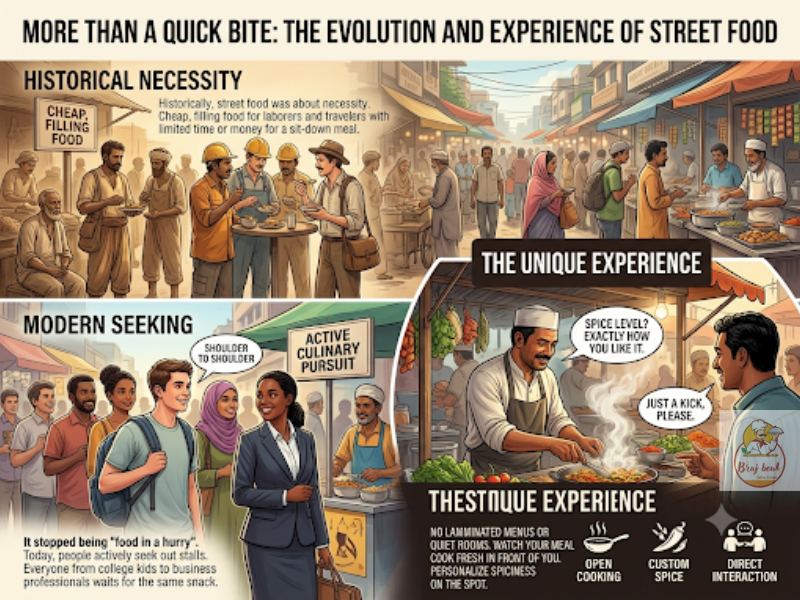
Going back a few generations, street food was mostly about necessity — cheap, filling food for laborers and travelers who didn’t have the time or the money for a proper sit-down meal. Somewhere along the way it stopped being just “food for people in a hurry” and turned into something people actively seek out. Walk up to any decent stall today and you’ll see a college kid standing shoulder to shoulder with someone in a suit, both waiting on the exact same snack.
A Few Things That Define It
- You’ll find it everywhere:
Footpaths, bus stops, train stations, the middle of a packed bazaar — wherever people are moving, there’s a stall.
- It’s genuinely cheap:
No rent, no waitstaff, no overhead — so the price stays low without the flavor taking a hit.
- Speed is the whole design:
Order, watch it cook, eat it standing up if you have to.
- It’s often decades old:
A lot of these recipes came from someone’s grandmother, and they haven’t changed much since.
Chaat, and Why Indian Street Food Hits Different
In most parts of India, this whole category has a name: chaat. And chaat is basically a balancing act on a plate — sweet, sour, spicy, salty, crunchy, soft, sometimes all of that in one bite. Because the country is so big and so regionally distinct, the flavor completely shifts every few hundred miles. Drive four hours in any direction and you’ll be eating something totally different.
That variety is really the whole appeal. Cold day, want something hot and greasy? There’s a stall. Blazing hot afternoon, want something cold and sweet? There’s a stall for that too. There’s always a stall.
Region by Region: What to Actually Order
Every part of the country cooks with different staples, different techniques, different heat levels. Here’s the breakdown.
North India — Heavy on Spice, Heavy on Comfort
Delhi, Punjab, Uttar Pradesh — this is potato-and-chickpea country, and the food is rich.
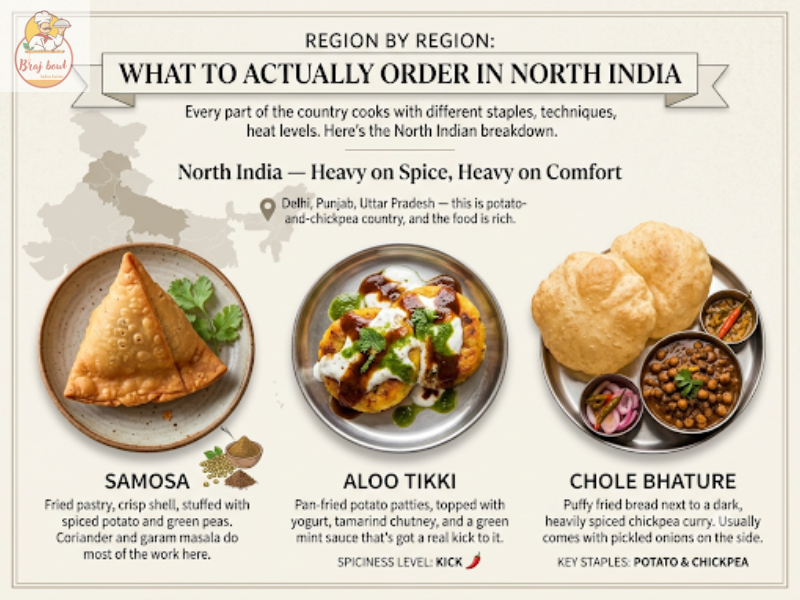
- Samosa — Fried pastry, crisp shell, stuffed with spiced potato and green peas. Coriander and garam masala do most of the work here.
- Aloo Tikki — Pan-fried potato patties, topped with yogurt, tamarind chutney, and a green mint sauce that’s got a real kick to it.
- Chole Bhature — Puffy fried bread next to a dark, heavily spiced chickpea curry. Usually comes with pickled onions on the side.
West India — Fast Food, But Not the American Kind
Mumbai runs the show here, and honestly the food reflects the city’s pace — it grew up feeding mill workers who barely had time to sit.
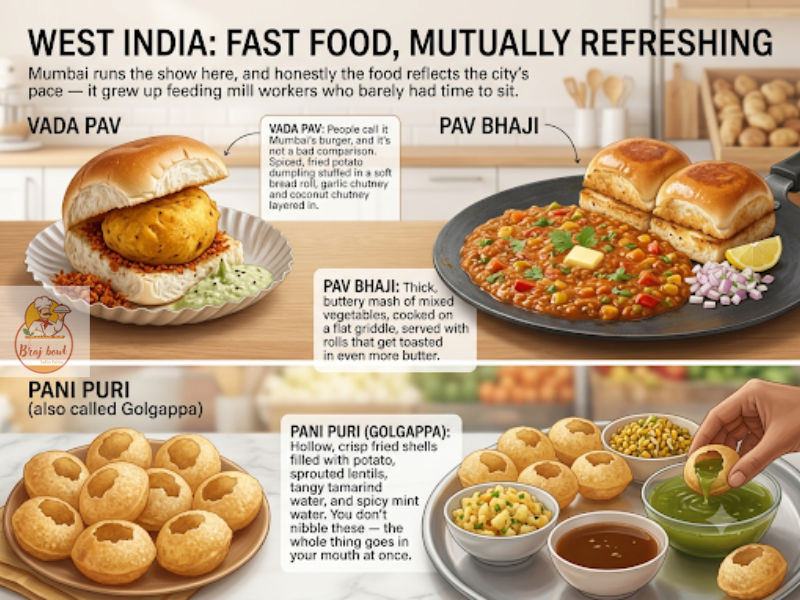
- Vada Pav — People call it Mumbai’s burger, and it’s not a bad comparison. Spiced, fried potato dumpling stuffed in a soft bread roll, garlic chutney and coconut chutney layered in.
- Pav Bhaji — Thick, buttery mash of mixed vegetables, cooked on a flat griddle, served with rolls that get toasted in even more butter.
- Pani Puri (also called Golgappa) — Hollow, crisp fried shells filled with potato, sprouted lentils, tangy tamarind water, and spicy mint water. You don’t nibble these — the whole thing goes in your mouth at once.
South India — Lighter, Fermented, Still Packs a Punch
Rice, lentils, coconut — that’s the foundation down south, and somehow it still manages to be filling.
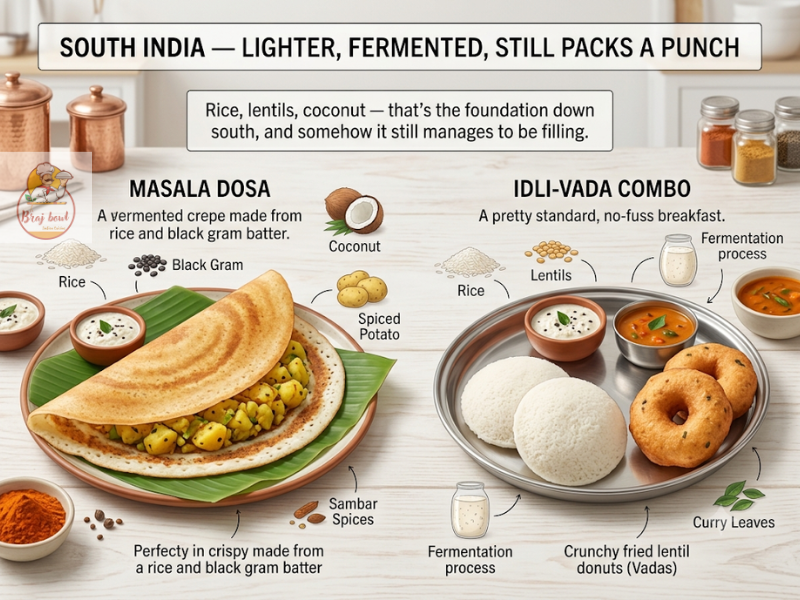
- Masala Dosa — Thin, crisp, fermented crepe made from rice and black gram batter, folded around spiced potato, served with coconut chutney and sambar on the side.
- Idli-Vada Combo — Soft steamed rice cakes paired with crunchy fried lentil donuts. A pretty standard, no-fuss breakfast.
Okay, But Is It Safe to Eat?
A few basic rules will get you most of the way there:
- Follow the line, not the empty stall:
Busy vendors sell through their stock fast, which means fresher ingredients.
- Watch it cook:
If it’s made fresh in front of you and served hot, you’re generally fine.
- Go easy on the water:
Stick to bottled or filtered, skip the ice, and maybe hold off on raw chutneys if your stomach isn’t used to the local water yet.
- Check how the stall looks:
Clean setup, covered ingredients, plates or leaf platters instead of shared utensils — small signs, but they matter.
Questions People Actually Ask (FAQ)
1.What is the definition of street food?
Food sold by vendors in public places such as streets, markets and fairs, usually cooked on small carts or stalls, intended to be eaten on the spot and at the time.
2.What is the favourite street food in India?
Pani Puri (or Golgappa, or Puchka, depending where you are) and Vada Pav tend to top the list, mostly because they’re everywhere and everyone has an opinion on the best version.
3.Is Indian street food vegetarian?
A big chunk of it is — potatoes, lentils, chickpeas, vegetables, that’s the backbone. But you’ll also find plenty of non-veg options like kebabs, kathi rolls, and egg dishes in most cities.
4.How’s street food different from fast food?
Street food usually comes from an independent vendor cooking a family recipe in the open air. Fast food comes from a chain, with standardized ingredients and the same process every single time, no matter which branch you’re at.
5.Why is street food such a big deal in India?
It’s cheap, it’s rooted in local culture, there’s an insane amount of variety, and it feeds millions of people who need something quick between one place and the next.
6.What exactly is chaat?
It’s the umbrella term for tangy, savory Indian snacks — something crispy at the base (fried dough or potato usually), then yogurt, tamarind chutney, mint chutney, onions, and a spice mix on top.
7.Is it all spicy?
Not really, no. Some of it’s bold, sure, but most vendors will happily tone down the chili or the spicy water if you ask.
8.Best city for street food?
Delhi, Mumbai, Kolkata, and Indore usually come up first — each one’s known for its own signature dish that people travel specifically to try.
Last Thought
Street food was never just about grabbing something quick. It’s closer to a window into how people actually live and eat day to day. In India, it puts everyone at the same stall regardless of who they are, and it hands you flavors you just won’t find sitting in a formal dining room. Whether it’s a hot samosa or a dosa crisping up right in front of you, this is one of the most honest ways to actually taste the country.