
Walk into an Indian kitchen while dinner’s cooking and you’ll smell it before you see anything — seeds hit hot oil, and the whole room fills with something warm, nutty, a little smoky, hard to pin down until you’ve smelled it a few times.
On paper, Indian spices are just dried seeds, bark, roots, and other plant parts used to flavor and preserve food. That’s the textbook version. In practice, they’re closer to the backbone of the whole cuisine. Plain lentils, a cut of chicken, a handful of potatoes — none of it becomes a real dish until spices go to work on it.
A Little History Behind the Flavor
Spices have been part of life on the Indian subcontinent for thousands of years, long before turmeric or cardamom ever left the region. They were used in daily meals and in traditional medicine well before anyone thought to trade them overseas.
There’s a medical side to this too, rooted in Ayurveda. Cooks weren’t just picking spices for taste — they picked them for effect. Ginger and pepper show up more in colder months because they warm the body. Coriander and fennel get used to cool things down and settle the stomach.
The Spices Worth Keeping in Your Kitchen
There are hundreds of spices used across India’s different regions, but a small core group covers most everyday cooking. Start with these if you’re stocking a rack from nothing.

Turmeric (Haldi)
— that bright yellow color in so many dishes? This is where it comes from. Earthy, a bit bitter, and known for its antioxidant qualities.
Cumin Seeds (Jeera)
— small, curved seeds with a smoky, nutty punch. Toss them in hot oil early on and the smell opens up fast.
Coriander Seeds (Dhania)
— mild, sweet, slightly citrusy. It softens the sharper spices around it and usually gets ground alongside cumin as a base for gravies.
Mustard Seeds (Rai)
— tiny black or brown seeds that crackle in hot oil, giving off a sharp bite common in South Indian and coastal cooking.
Cardamom (Elaichi)
— green cardamom is sweet and floral, used in both sweets and savory food. Black cardamom is smokier, bolder, a different animal entirely.
Cinnamon or Cassia Bark (Dalchini)
— soft sweetness, woody smell, shows up in slow-simmered curries, rice, and spiced chai.
Cloves (Laung)
— strong and sharp, sweet in small doses. Go easy, though — too many and they’ll swallow the whole dish.
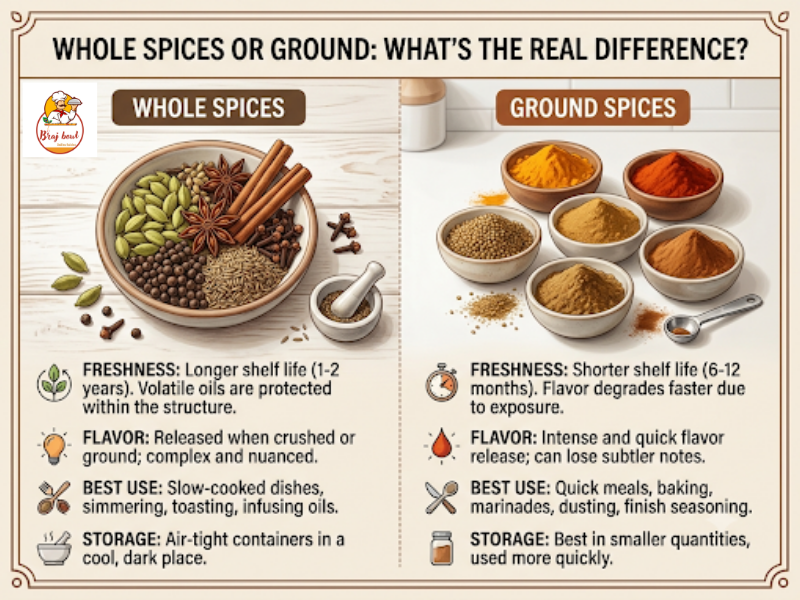
Whole Spices or Ground — What’s the Real Difference?
Knowing when to reach for whole spices versus ground powder is one of those things that quietly separates home cooks who’ve been at it a while from everyone else.
Whole spices simply hold their oils longer. Grind your own at home — mortar and pestle, or a cheap spice grinder — and you’ll taste the difference almost instantly.
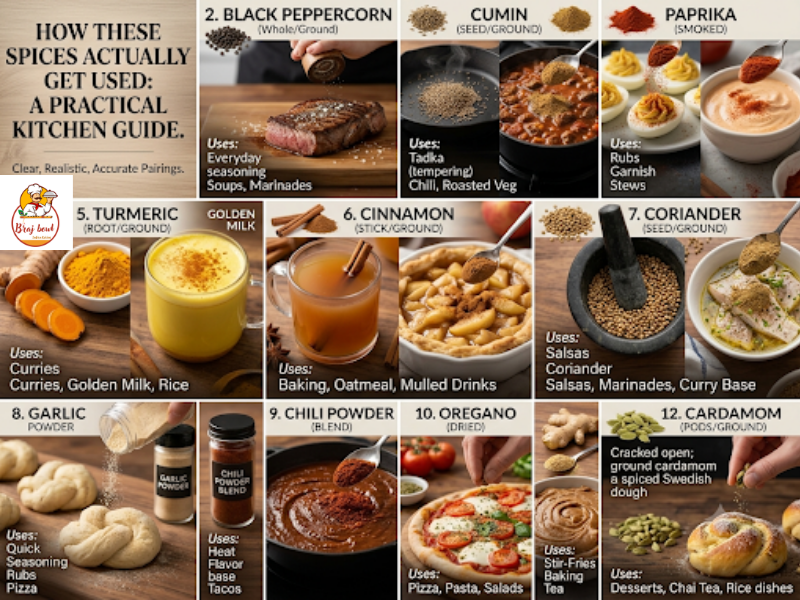
How These Spices Actually Get Used
Western cooking tends to season near the end. Indian cooking does the opposite, building flavor in stages from the very first minute in the pan.
1. Tempering (Tadka or Chhonk)
Whole or crushed spices go into hot oil or ghee for a few seconds — just enough for the heat to crack them open and pull the oils out. That oil either becomes the base of the dish or gets poured over the top right before serving.
2. Spice Blends (Masalas)
“Masala” just means a spice mix — dry or made into a paste with ginger, garlic, or water.
Garam masala (“warm spice mix”) is the most recognized one, usually built from cinnamon, cardamom, cloves, cumin, and black pepper. Unlike curry powder, which goes in early, garam masala tends to go in last, so its aroma doesn’t cook off.
3. Roasting, Then Grinding
Dry-roasting whole spices before grinding pulls the moisture out and concentrates the flavor. It’s one extra step, but it beats anything pre-ground off a shelf.
Health Benefits People Actually Talk About

Spices weren’t only about taste — a lot of their reputation comes from centuries of traditional medicine, and modern studies back up some of it.
- Digestion — cumin, fennel, and ginger help with digestive enzymes and bloating.
- Inflammation — curcumin, turmeric’s active compound, has been studied for anti-inflammatory effects.
- Blood sugar — Studies have linked cinnamon to improved blood sugar levels.
- Antioxidants – Cloves and cardamom have compounds that help prevent damage to cells from oxidative stress.
Common Questions (FAQ)
1.Curry powder vs authentic Indian spices?
Curry powder is a western shortcut, mostly turmeric and coriander, to mimic Indian flavour. True Indian cooking is rarely this close, with single spices and spice blends for each individual dish.
2.Is Indian food always spicy-hot?
Most of the spices here (cardamom, cumin, cinnamon, coriander) are about flavor and smell, not heat. The heat is in the chili peppers, not in the aromatics.
3.What’s the best way to store spices?
Airtight glass or metal jars, kept away from light, heat, and moisture. A dark cupboard works fine. Don’t keep them right above the stove — the heat wears the oils down fast.
4.Can I make garam masala myself?
Yes — dry-roast cinnamon, cardamom pods, cloves, cumin seeds, and peppercorns until fragrant, cool them, then grind into a powder.
5.How long do spices actually last?
Whole spices, three to four years if stored right. Ground ones fade faster — use them within six months to a year.
6.Why fry spices in oil before anything else?
That’s tempering — it pulls the fat-soluble flavor compounds out of the spices and spreads them through the whole dish from the start.
7.Can I consume turmeric daily?
Yes, it’s fine for regular cooking use. Adding a pinch of black pepper with it actually helps your body absorb curcumin better.
Wrapping Up
Getting familiar with Indian spices opens up a lot more than a spice rack — it changes how you cook entirely. They’re not there just for heat; they’re a whole system built to flavor, heal, and turn simple ingredients into something worth sitting down for. Learn a handful of core spices, get comfortable with tempering and roasting, and your everyday cooking starts looking a lot less ordinary.