
Home-style, authentic Indian cooking ranks among the most well-rounded and nutrient-packed food traditions anywhere on the planet. The catch is that what you get at many restaurants—swimming in cream, loaded with oil, built on refined flour—barely resembles what people actually eat at home in India.
So let’s set the restaurant menu aside for a moment and look at what a real, traditional Indian plate brings to the table.
What Makes a Traditional Indian Plate So Nutritious
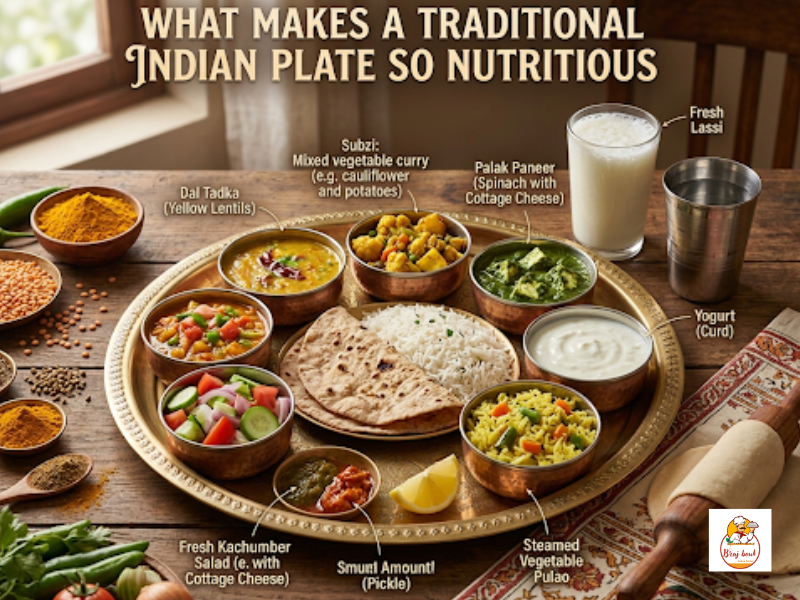
Indian home cooking wasn’t designed by nutritionists—it evolved over generations, and somehow it landed on something remarkably balanced anyway. A typical thali brings together slow-digesting carbs, plant proteins, fiber, and good fats almost by default. Break down what actually lands on the plate and you’ll see why:
Whole grains:
— Brown rice, millets such as jowar, bajra, and ragi, along with whole-wheat roti, deliver steady, long-lasting energy instead of a sugar spike followed by a crash.
Plant proteins:
— Lentils, chickpeas, rajma, and mung beans aren’t just protein sources; they bring fiber along for the ride, which keeps digestion moving and appetite in check.
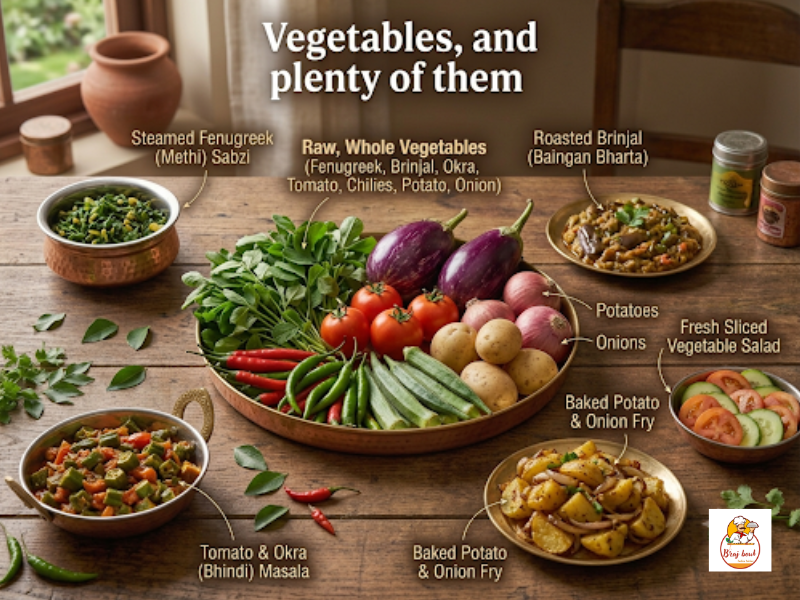
Vegetables, and plenty of them:
— Okra, brinjal, spinach, karela, cauliflower—these show up on Indian dinner tables constantly, packing in vitamins and antioxidants without anyone even thinking about it as “healthy eating.”
Gut-friendly ferments and dairy:
— A side of raita, or breakfast staples like idli and dosa, quietly does a lot of work for digestive health thanks to natural fermentation.
Put these together the way most Indian households actually cook, and you end up with a genuinely complete meal—no protein powder or fortified cereal required.
Spices Aren’t Just for Flavor
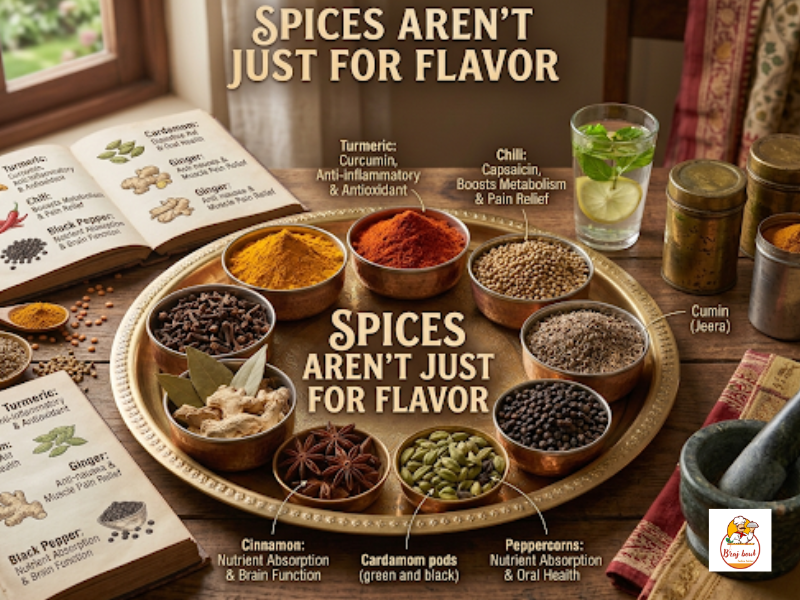
You really can’t have a conversation about Indian food without talking spices. They’re not there purely to make things taste good, either—researchers have spent the last couple of decades catching up to what Indian kitchens have known for centuries.
The beauty of cooking this way is that a few well-chosen whole spices can carry an entire dish—no need to lean on excess salt or sugar to make up for flat flavor.
So Where Does It Go Off the Rails?
If the ingredients are this solid, why does Indian food still get a bad rap sometimes? Honestly, it’s rarely the ingredients themselves causing trouble. It’s what happens to them in a commercial kitchen.
Oil gets heavy-handed:
A dish that should be light suddenly isn’t, once someone pours in half a cup of oil just to sauté a handful of vegetables.
Refined flour takes over:
Naan, rumali roti, bhature—all made from maida, which lacks fiber and sends blood sugar climbing faster than whole-grain alternatives would.
Cream does the heavy lifting:
paneer makhani tastes incredible largely because of cashew paste, heavy cream, and generous butter. Nobody’s arguing they’re not delicious. But eating them as a daily staple is a different story than enjoying them occasionally.
Five Simple Swaps for Healthier Indian Cooking
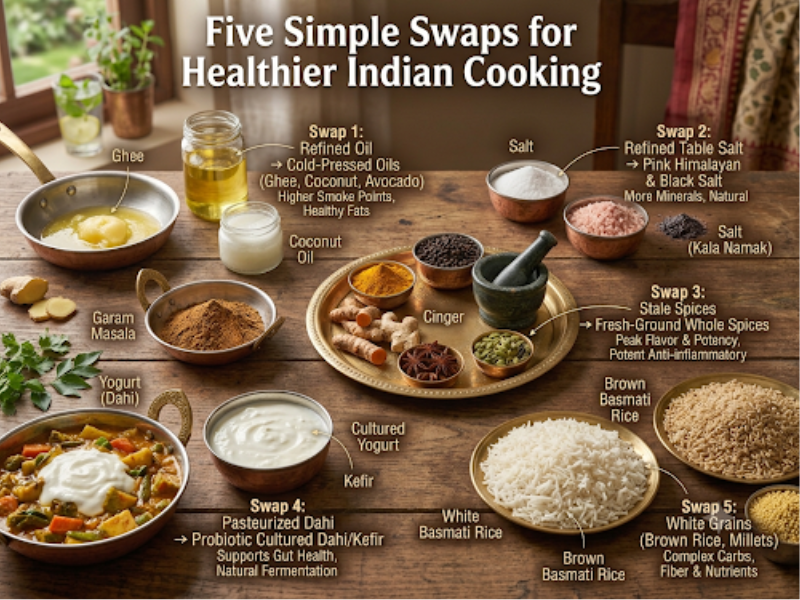
Getting Indian food to fit into a healthier lifestyle doesn’t take a complete overhaul—just a handful of smart adjustments.
- Go for whole grains over refined ones :
Whole-wheat roti or phulka instead of naan. If rice is on the menu, keep portions reasonable or reach for an unpolished variety.
- Go easy on the tadka :
One tablespoon of oil is genuinely enough to bloom your spices for a whole pot of dal meant to feed a family.
- Eat your vegetables first :
A raw salad or a cooked sabzi before you touch the carbs helps fill you up on fiber early.
- Balance your protein sources :
Pair dal and chana with grilled or tikka-style chicken and fish rather than reaching for the deep fryer.
- Rethink your dairy :
Low-fat yogurt works fine for raita, and pureed tomato-onion bases (or a splash of coconut milk) can replace heavy cream in most gravies without sacrificing much flavor.
Common Questions About Indian Food and Health (F&Q)
1.Does Indian food help with weight loss?
It can, and quite effectively—lean on lentils, lean protein, vegetables, and whole grains, and keep the oil and refined carbs to a minimum.
2.Is it safe for diabetics?
Generally, yes. Indian cuisine offers plenty of low-glycemic staples—lentils, chickpeas, bitter gourd, millet rotis—that help keep blood sugar steadier than you might expect.
3.Does Indian food tend to run high in sodium?
Restaurant and packaged versions often do, thanks to added salt and sauce bases. Home cooking, though, gives you full control over how much salt goes in.
4.What about street food—healthy or not?
Most of it, like samosas, kachoris, and puri bhaji, is deep-fried and calorie-heavy. That said, boiled chana chaat or steamed idlis are solid, healthier picks if you’re craving something from a street stall.
5.Is ghee something to avoid?
Not at all, in moderation. It carries beneficial fatty acids and fat-soluble vitamins—just keep it to around 1–2 teaspoons a day, since it adds up in calories quickly if you’re not paying attention.
6.How do I make curries less heavy?
Cut back on cream and butter, build your base with onion and tomato, use less oil overall, and thicken your gravy with pureed vegetables or yogurt instead.
7.Can vegetarians get enough protein eating Indian food?
Definitely. Lentils, legumes, paneer, and whole grains together cover a complete amino acid profile without needing meat at all.
8.Is white rice a problem in an Indian diet?
Not inherently—it’s just a fast-digesting carb. Pair it with lentils and vegetables, and the fiber slows things down enough to avoid a blood sugar spike.
Conclusion
Is Indian cuisine healthy? Cooked the traditional way, absolutely—yes. It’s a deeply flavorful, wildly diverse way of eating that naturally supports digestion, heart health, and overall wellness through whole foods and spices that do more than just taste good. Stay mindful of how much oil you’re using, swap in whole grains where you can, and save the cream-based dishes for special occasions rather than everyday meals. Do that, and you get to keep everything comforting about Indian food while still treating your body well.