You smell a Punjabi kitchen before you ever see one. Lentils that have been sitting on low heat for what feels like hours, spices popping in hot ghee, roti puffing up over open flame — it hits you at the door, honestly.
Punjab is in northern India, and people know the region’s cooking for being big and hearty, nothing shy about it. But here’s the thing a lot of outsiders miss: on any regular day, in most homes, it’s the vegetarian food doing all the work. Meat gets talked about more than it gets eaten, at least at the everyday family table.
Why the Food Turned Out This Way
It’s farming, basically. That’s the short answer. Punjab has been agricultural land forever, and people out working the fields all day need food that keeps them going — not something dainty you pick at. So over generations the cooking built itself around grains, dairy, lentils, whatever vegetables were around that season. Nothing mysterious about it.
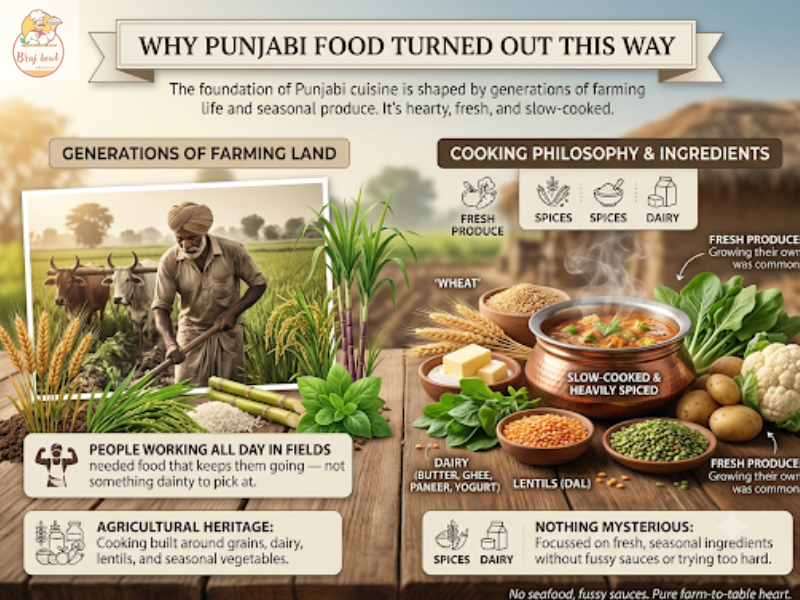
You won’t find fussy sauces here, or seafood, or anything trying too hard. It’s slow, it’s heavily spiced, and the produce is about as fresh as it gets since a lot of families were growing their own not that long ago.
The Stuff That Shows Up in Everything
A handful of ingredients basically run the show, no matter what dish you’re eating.
Ghee, for one — and makkhan, which is homemade white butter, in case that’s new to you. These aren’t garnish. They’re what makes curries and bread taste the way they taste. You can’t really substitute your way around it.
Then there’s tadka — onion, tomato, ginger, garlic, all fried down together — and it’s in almost every gravy you’ll come across. Once you’ve had enough Punjabi food you start recognizing that smell before the dish even hits the table.
Wheat’s the main grain most of the year, though corn flour takes over once it gets cold. And dairy is everywhere — paneer, thick dahi, glasses of chaas — mostly there to balance out all the warm spice. Cumin, coriander, turmeric, garam masala, kasuri methi, red chili powder. That’s really the whole spice cabinet. Nothing fancy, just depth.
Dishes Worth Actually Trying
Sarson Ka Saag with Makki Ki Roti :
This is the one everyone points to first. Mustard greens cooked down with spinach and bathua, a lot of garlic, plenty of ghee, served with cornmeal flatbread and butter melting on top. It’s a winter thing, mostly, and honestly best eaten sitting on the floor with your hands, if you can manage it.
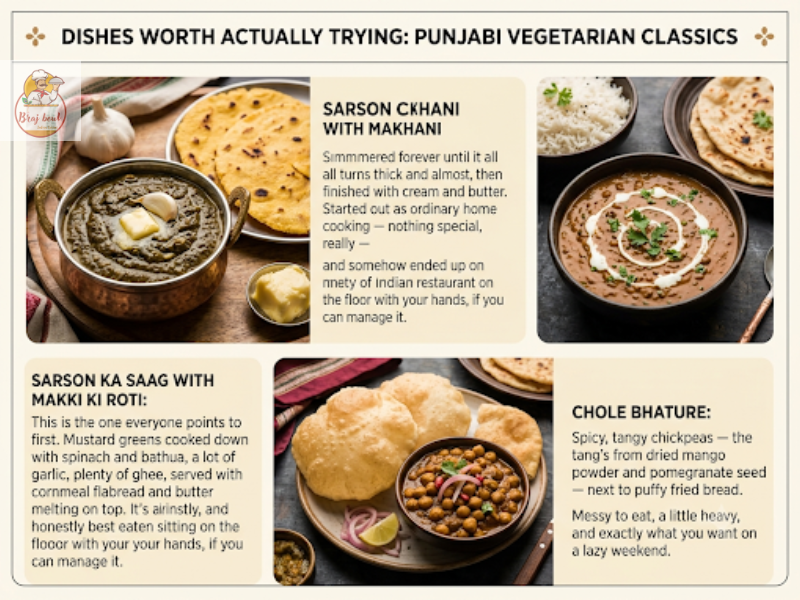
Dal Makhani :
Black lentils, kidney beans, simmered forever until it all turns thick and almost velvety, then finished with cream and butter. Started out as ordinary home cooking — nothing special, really — and somehow ended up on the menu of pretty much every Indian restaurant on earth.
Chole Bhature :
Spicy, tangy chickpeas — the tang’s from dried mango powder and pomegranate seed — next to puffy fried bread. Messy to eat, a little heavy, and exactly what you want on a lazy weekend morning.
Paneer Tikka and Shahi Paneer :
Paneer’s everywhere in this cooking, and these two show why. Tikka’s grilled, smoky, charred at the edges. Shahi Paneer’s the opposite mood entirely — soft, mild, creamy, cardamom and nuts running through the gravy.
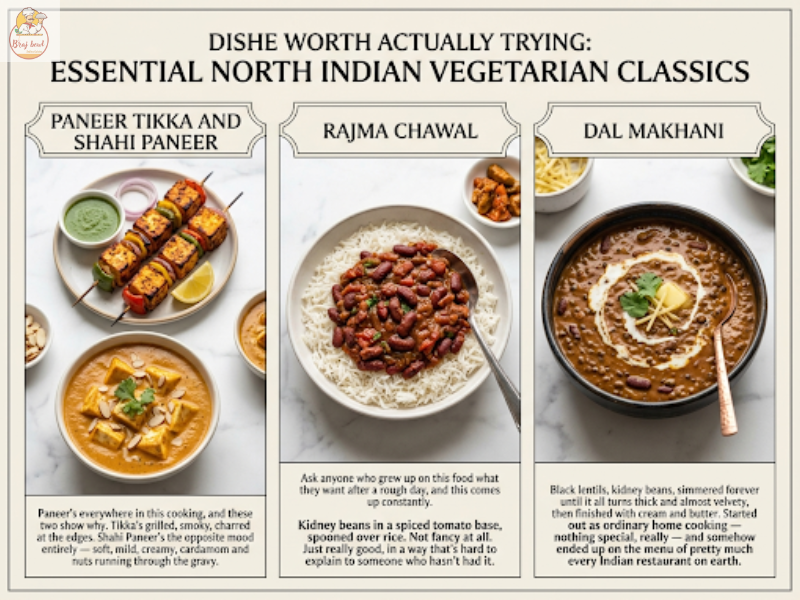
Rajma Chawal :
Ask anyone who grew up on this food what they want after a rough day, and this comes up constantly. Kidney beans in a spiced tomato base, spooned over rice. Not fancy at all. Just really good, in a way that’s hard to explain to someone who hasn’t had it.
Bread Does a Lot of Work Here
In a Punjabi meal, bread isn’t sitting on the side doing nothing — it’s how you actually eat everything else.
Tandoori roti’s whole wheat, slapped straight onto the clay wall of a tandoor. Stuffed parathas get packed with spiced potato, or paneer, or grated cauliflower, fried in ghee till they’re crisp on the outside. Naan’s softer, often brushed with garlic butter, with those charred spots everyone ends up fighting over.
What Goes With It — Drinks and Sweets
Lassi’s the go-to drink, thick and churned, served in those tall steel cups. Sweet with mango or cardamom, or salty with roasted cumin — depends who you ask. Either way it’s meant to cool you down and settle things after a heavy, spiced-up meal.
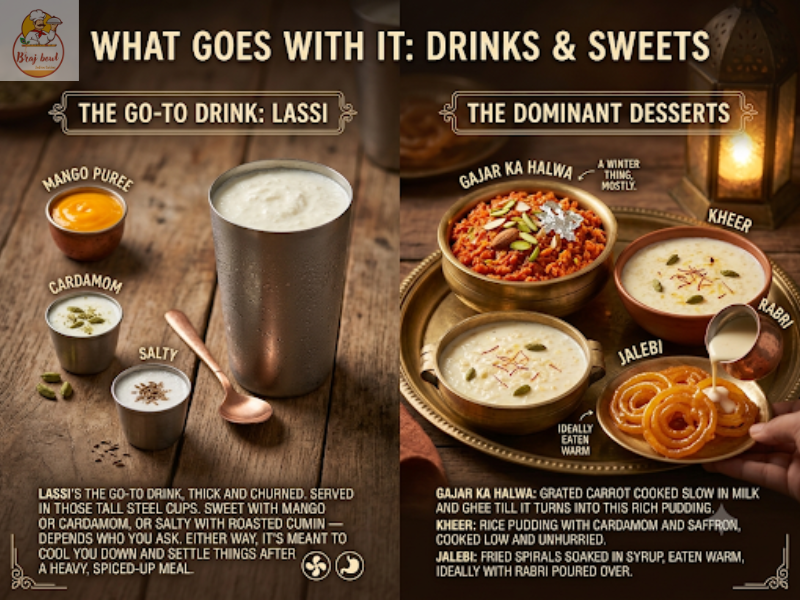
For dessert there’s really three that dominate. Gajar Ka Halwa, which is grated carrot cooked slow in milk and ghee till it turns into this rich pudding — mostly a winter thing. Kheer, rice pudding with cardamom and saffron, cooked low and unhurried. And Jalebi — fried spirals soaked in syrup, eaten warm, ideally with rabri poured over.
Questions People Keep Asking (FAQ)
1.What actually makes vegetarian Punjabi food different from other Indian cooking?
It’s the richness — ghee, paneer, fresh wheat bread, and cooking that takes its time instead of rushing.
2.Is it always super spicy?
Not really. It leans warm rather than hot — cumin, garam masala, that kind of thing — rather than piling on chili for heat’s sake.
3.What’s the most famous vegetarian dish out of the region?
Sarson Ka Saag and Makki Ki Roti gets mentioned first almost every time, with Dal Makhani and Chole Bhature right behind it.
4.What’s tadka, exactly?
The tempering — spices and onion and garlic and ginger and tomato, all fried in ghee or oil, then stirred into lentils or vegetables. Nearly every gravy starts here.
5.Can a vegetarian actually eat well with this kind of food?
Very easily. There’s a huge range built entirely around lentils, dairy, greens, and seasonal vegetables — it’s not some afterthought category tacked onto a meat-heavy cuisine.
6.What flour goes into the breads ?
Whole wheat atta, mostly, for daily roti and paratha. Corn flour and refined maida show up for specific breads like Makki Roti and naan.
7.How’s Dal Makhani different from regular Dal Tadka?
Dal Tadka’s yellow lentils with a simple tempering. Dal Makhani’s black lentils and kidney beans, cooked slow with butter and cream — heavier, richer, takes way longer.
Last Thought
At the end of it all, vegetarian Punjabi food comes down to generosity — good ingredients, patience in the cooking, and food that’s meant to actually fill you up. Whether that’s Rajma Chawal on some random Tuesday or Dal Makhani simmering for a family get-together, there’s a warmth to it that’s hard to put into words until you’ve actually sat down and had it. If you’re new to Indian food, or just circling back to what you grew up eating, this is the kind of cuisine that makes people feel at home pretty fast.