Ask ten different Indians what “traditional Indian food” means and you’ll get ten different answers, mostly depending on which state their grandmother cooked in. There isn’t one Indian cuisine. There are dozens, shaped by climate, soil, religion, and a few thousand years of trade routes running through the place. But underneath all that regional chaos, one thing holds steady — a vegetarian tradition so old and so well-developed it’s basically its own art form at this point.
And it’s not vegetarian food built around absence, either — not “meat, minus the meat.” Indian kitchens spent thousands of years figuring out how to turn grains, lentils, vegetables, and dairy into meals that need nothing else. Religion played a role. So did Ayurveda. So did generations of home cooks just quietly perfecting things in kitchens nobody was filming. The spice blend usually does as much work as whatever’s actually in the pot.
What Holds Indian Vegetarian Cooking Together
Strip away the regional differences and you’ll find a handful of ingredients showing up again and again, just prepared in wildly different ways depending on where you are.
Lentils and pulses do the heavy lifting protein-wise:
Split peas, red lentils, chickpeas, black gram — these aren’t side dishes, they’re the backbone of the meal.
Grains fill out the plate everywhere you go:
Rice and wheat dominate, whether that means a bowl of basmati, a stack of roti or paratha, or millet-based breads like those made from jowar and bajra in drier regions.
Dairy shows up fresh, not processed:
Ghee, homemade yogurt, and paneer bring richness and a bit of tang, and they’ve been part of Indian cooking long before “probiotic” became a marketing buzzword.
Then there’s the spice cabinet:
— cumin, turmeric, coriander, mustard seed, cardamom, hing. These aren’t just there for heat. Many were chosen historically because they aid digestion, and together they give each regional cuisine its distinct personality.
Up North: Hearty, Buttery, and Built for Cold Winters
Northern India grows wheat, keeps dairy cattle, and cooks accordingly. The food here tends to be rich, warming, and generous with ghee and cream.
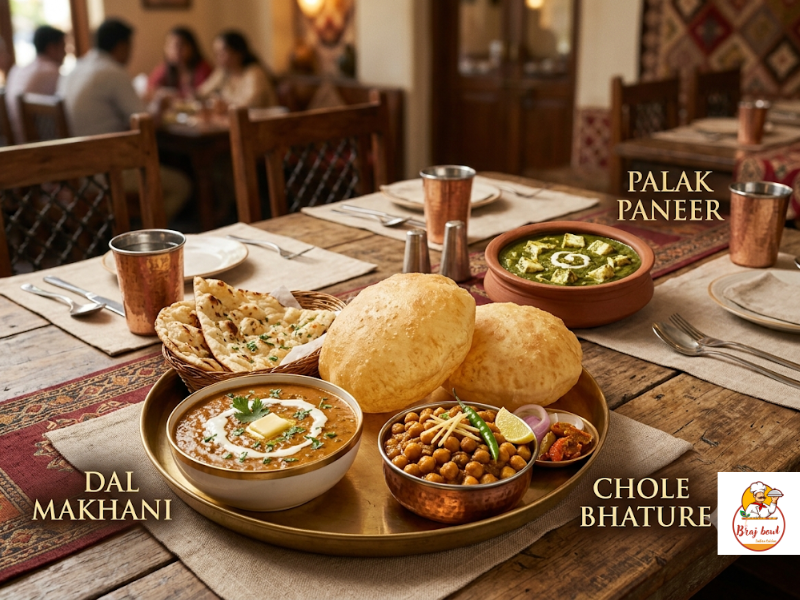
Dal Makhani
Punjab’s contribution. Whole black lentils and kidney beans simmer for hours, sometimes overnight, with tomato, garlic, ginger, and a finish of butter or cream. Comes out thick, almost smoky. You eat it with naan because there’s no other reasonable way to eat it.
Chole Bhature
the breakfast-and-street-food pairing you see everywhere north of Delhi. Tangy chickpea curry, deep-fried bread. The chickpeas cook in a dark gravy — dried mango powder, cinnamon, sometimes tea leaves — which is where that deep color and sharp tang come from.
Palak Paneer
Blocks of soft paneer sit in a smooth spinach gravy laced with warming spices. It’s proof that Indian cooks can take something as ordinary as leafy greens and turn it into a dish worth ordering again and again.
Down South: Fermented, Tangy, and Coconut-Forward
Head toward the coast and everything changes — rice replaces wheat as the daily staple, coconut shows up in nearly every dish, and fermentation becomes central to the cooking process.
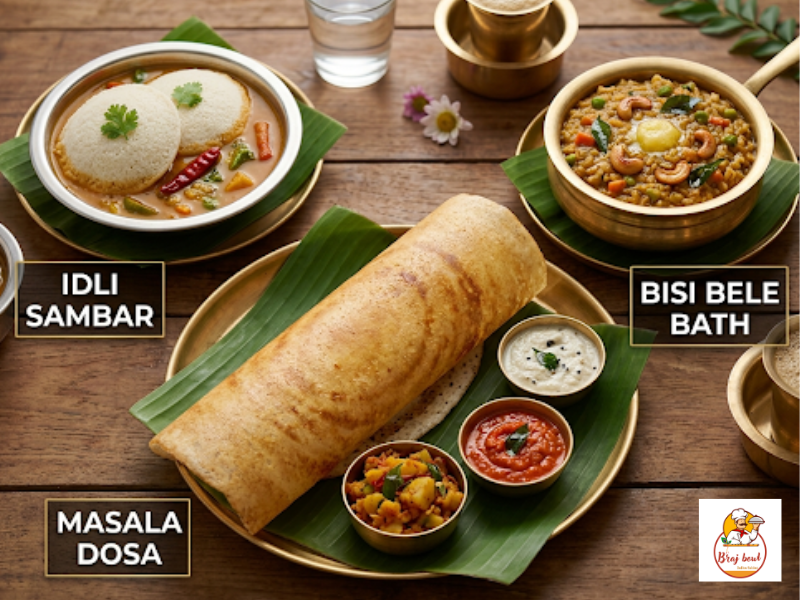
Masala Dosa
probably the most internationally famous Indian dish, period. Fermented rice-and-lentil batter, poured thin, cooked till crisp, wrapped around spiced potato with mustard seed and curry leaf. Coconut chutney and sambar aren’t optional.
Idli and Sambar
Soft, steamed rice cakes make for one of the gentlest breakfasts you’ll find anywhere in Indian cuisine. Sambar — a tangy lentil stew built on tamarind, drumsticks, and a distinct spice mix — is what turns simple idlis into a full meal.
Bisi Bele Bath
Karnataka’s answer to “one-pot meal.” Rice, lentils, vegetables, tamarind, a heavy hand of ghee and spice, all cooked together. Doesn’t need a side. Doesn’t want one either.
The West and East: Two More Very Different Stories
Gujarat and Rajasthan
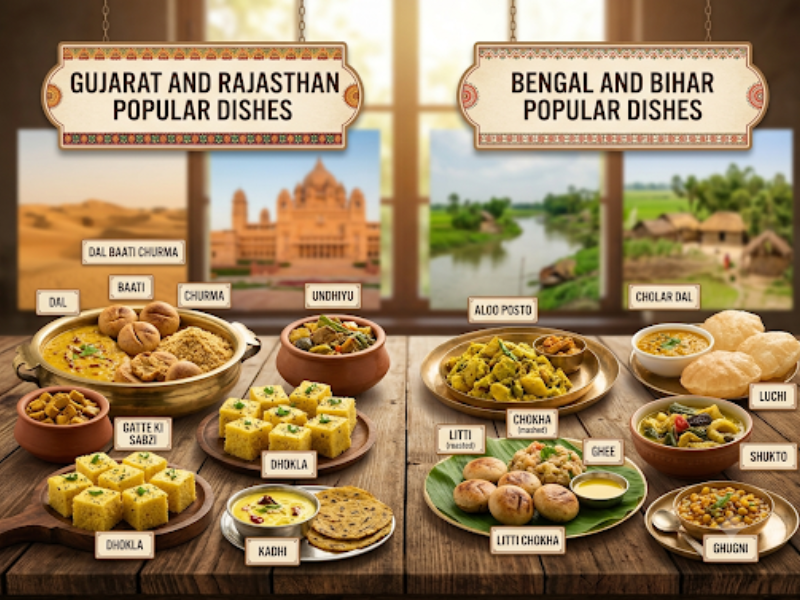
Gujarat might run the most consistently vegetarian kitchen in the whole country. Dhokla — steamed, spongy, made from fermented chickpea batter — nails that savory-sweet balance the region’s known for. Rajasthan, being drier and harsher, goes heartier: Dal Baati Churma, hard wheat rolls roasted over coals, dunked in ghee, served with spiced lentils.
Bengal and Bihar
Over in Bihar, Litti Chokha takes wheat dough, stuffs it with roasted gram flour, bakes it, serves it alongside mashed roasted eggplant and tomato. Bengal’s gentler — Shukto, a slightly bitter vegetable stew, and Aloo Posto, potatoes in poppy seed paste, both far lighter on the spice than anything up north.
The Thali: Why Indians Eat Everything at Once
If you want to actually understand traditional Indian vegetarian food rather than just sample bits of it, order a thali. It’s a round platter surrounded by small bowls, each holding something different:
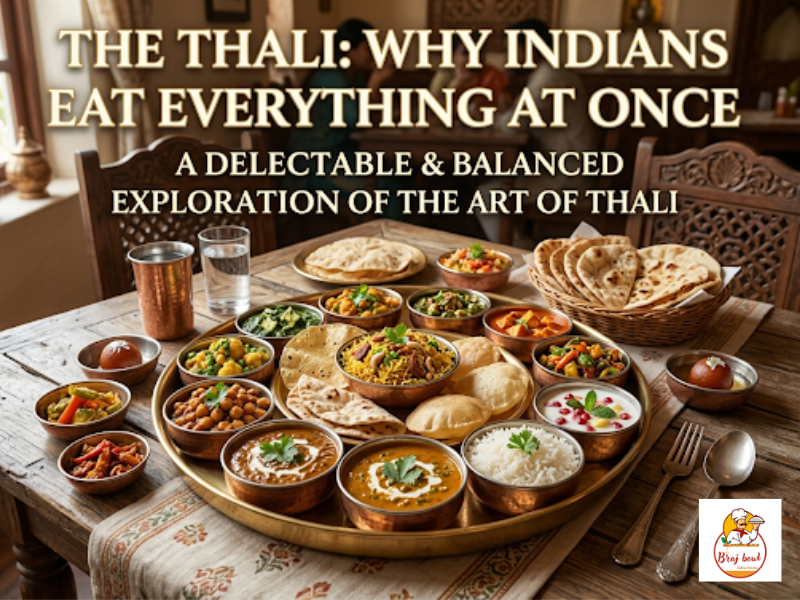
Grain – steamed rice or a warm flatbread
Lentils – a bowl of dal or kadhi
Vegetables – a dry sabzi and a gravy-based curry
Extras – yogurt, papad, chutney, pickle
Something sweet – kheer or gulab jamun, usually
None of this is random. The thali follows old Ayurvedic thinking, which holds that a proper meal should include all six tastes — sweet, sour, salty, bitter, pungent, and astringent — in one sitting.
Common Questions About Indian Vegetarian Food (FAQ)
1.Why is Indian food so associated with vegetarianism in the first place?
It traces back to religious traditions — Hinduism, Jainism, Buddhism — layered with Ayurvedic ideas about how plant-based eating supports overall health.
2.Is it all spicy?
No, not remotely. Spice, in Indian cooking, is mostly about flavor and smell, not heat. Loads of dishes are mild or downright gentle — it just depends heavily on region.
3.What does an ordinary Indian family actually eat on a regular day?
Dal, some cooked vegetable, roti or rice, maybe yogurt or a salad on the side. Nothing photographed. Just dinner.
4.Is this style of eating actually healthy?
Generally, yes. Whole grains, fiber-heavy legumes, vegetables, and spices with antioxidant properties make up the bulk of a traditional meal, especially when cooking is done with a light hand on oil or ghee.
5.What exactly is paneer?
It’s a fresh, unaged cheese that doesn’t melt when heated, which is why it holds its shape in curries. It soaks up flavor well, which is exactly why it works so well in dishes like Palak Paneer or Paneer Butter Masala.
6.Is any of this vegan-friendly?
A good portion of it, yes — anything built around lentils, vegetables, and rice tends to be naturally vegan. Where dairy shows up (ghee, milk, yogurt, paneer), swapping in plant oil usually does the trick if you’re avoiding animal products.
7.Why do so many South Indian dishes involve fermentation?
Fermenting the batter breaks down the grains and lentils, which makes them easier to digest and helps the body absorb more nutrients. It’s also exactly what gives dosas and idlis their light, airy texture.
8.What’s the actual difference between dal and curry?
Dal refers specifically to dishes made from split lentils or pulses. Curry is the broader umbrella term — it just means something cooked in a spiced sauce, whether that’s vegetables, legumes, or otherwise.
Where This All Leaves Us
Traditional Indian vegetarian food was never a restriction — it’s a few thousand years of refinement. Lentils, grains, seasonal vegetables, and a spice shelf doing serious work, all coming together into meals that don’t need meat to feel complete. Crisp dosa off a Chennai griddle, or dal simmered all night in a Punjabi kitchen — either way, there’s always another dish worth chasing down.